A sudden crooked smile, a weak arm, facial drooping or speech difficulty may look like minor problems, but they could be signs that a stroke is happening.
A stroke occurs when blood flow to part of the brain is cut off, or a blood vessel in the brain suddenly bursts and bleeds. The brain’s cells are highly sensitive to a lack of oxygen, and without it, the cells begin dying within minutes.
A stroke is a medical emergency that requires immediate assessment and treatment. Every minute it goes undetected, the brain loses close to two million neurons.
Yet, studies show that most individuals are not aware of stroke symptoms. The thing is, you don’t have to be an expert to identify the warning signs of stroke. You just need to keep in mind the four letters, which are F.A.S.T.
Recognising the signs of stroke can encourage families to seek emergency medical attention before valuable treatment time is lost. You can go for stroke management in Bardhaman at Ahad Multispeciality Hospital, which provides 24/7 emergency services by highly qualified specialists.
What Happens During a Stroke?
Stroke occurs when the brain suddenly stops receiving blood and oxygen. When blood flow is interrupted all of a sudden, the brain cells start getting damaged and can no longer function normally, which can lead to sudden stroke symptoms.
There are two main types of strokes.
Ischemic stroke: This is the most prevalent type, affecting more than 80 per cent of patients. It happens when a blood clot blocks or narrows an artery that supplies blood to the brain.
Hemorrhagic stroke: This makes up the remaining 13% to 15% of all cases. It is a life-threatening situation that happens when a weakened blood vessel in the brain leaks or ruptures and starts bleeding inside or around the brain.
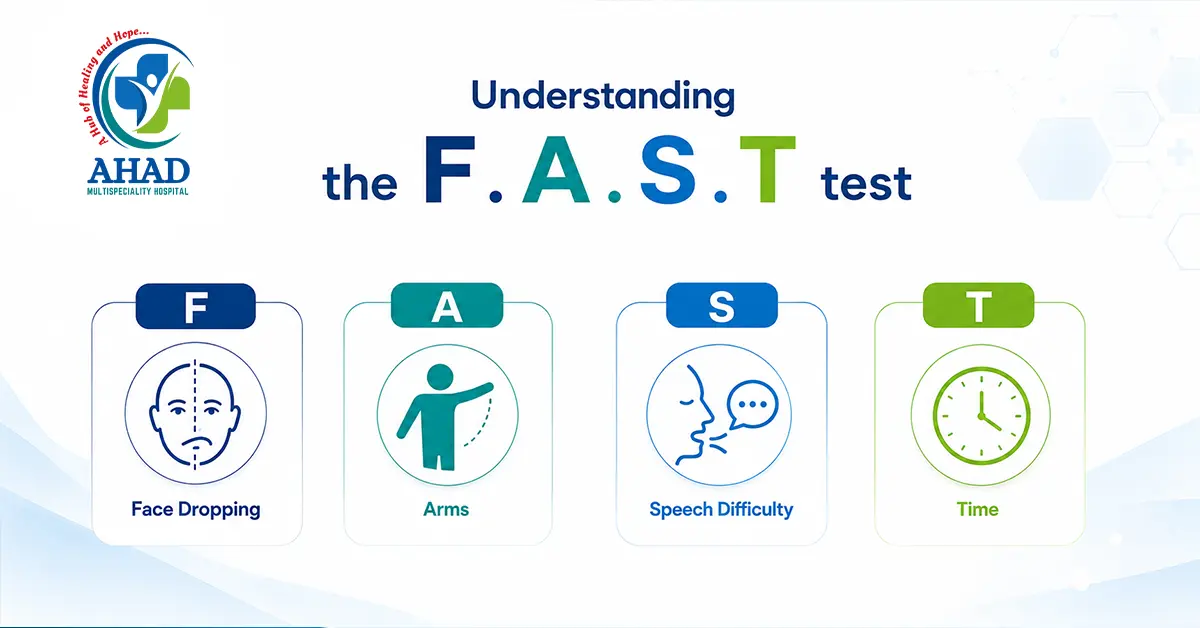
Understanding the F.A.S.T Test
The F.A.S.T. test is a quick four-step way to check if someone might be having a stroke so that one can immediately identify the symptoms and call for medical help. Here’s what it means so that you can seek timely stroke management in Bardhaman, as every minute can matter during a stroke.
F- Face Dropping: Ask the person to smile. Check if one side of the face droops or if the smile anyhow looks uneven. A stroke often affects the nerves that control facial muscles on one side. Hence, the face appears asymmetrical, especially around the mouth and eyes.
A-Arms: Ask the person to raise both arms. Find out if one of the arms drifts downward or if it feels too weak to lift at all. Whenever someone suffers from a stroke, they frequently experience weakness or numbness on one side of the body, particularly in the arms.
S- Speech Difficulty: Ask the person to speak a simple sentence. If you see that their speech is slurred, strange or hard to understand, or if the patient is struggling to find words, it can be an indication that the individual has suffered a stroke.
T-Time: If you notice any of these signs, don’t delay in seeking help. Act immediately and get the person admitted to the hospital. Don’t wait to see if the symptoms improve, even if they seem to pass quickly.
Conclusion
A stroke can affect a healthy 40-year-old person and even an elderly individual. You don’t have to be a doctor to save a life. Just remember the four letters, take note of the symptoms and treat it as an emergency.
Ahad Multispeciality Hospital provides the best stroke management in Bardhaman by expert doctors with compassion and advanced technology.